

When Your Child Doesn’t Open Up: How to Build Trust Through Everyday Conversations
At some point, every parent feels it:
You ask your child how their day was…
and you get “fine.”
You try again…
“nothing.”
And suddenly, it feels like you’re on the outside of your child’s world.
But here’s the truth most people don’t talk about:
It’s usually not that kids don’t want to open up.
It’s that they don’t yet feel safe, comfortable, or invited to.
The good news?
That can change—with small, intentional shifts in how we communicate.
Why Kids Don’t Open Up (Even When They Love You)
Children don’t shut down for no reason. There are a few common things happening:
They’re overwhelmed and don’t know how to explain their feelings
They’re used to being corrected or “fixed” quickly
They don’t feel like what they say will really be heard
They’ve learned that short answers end the conversation faster
And sometimes—it’s simpler than we think:
They’ve just never been taught how to talk about their day.
Communication is a skill.
And like any skill, it has to be modeled and practiced.
The Shift That Changes Everything: Ask Better Questions
Most of us were raised on questions like:
“How was school?”
“Did you have a good day?”
“Are you okay?”
These aren’t wrong—but they lead to one-word answers.
If you want real conversations, you need questions that:
Invite thinking
Allow multiple answers
Feel safe—not like a test
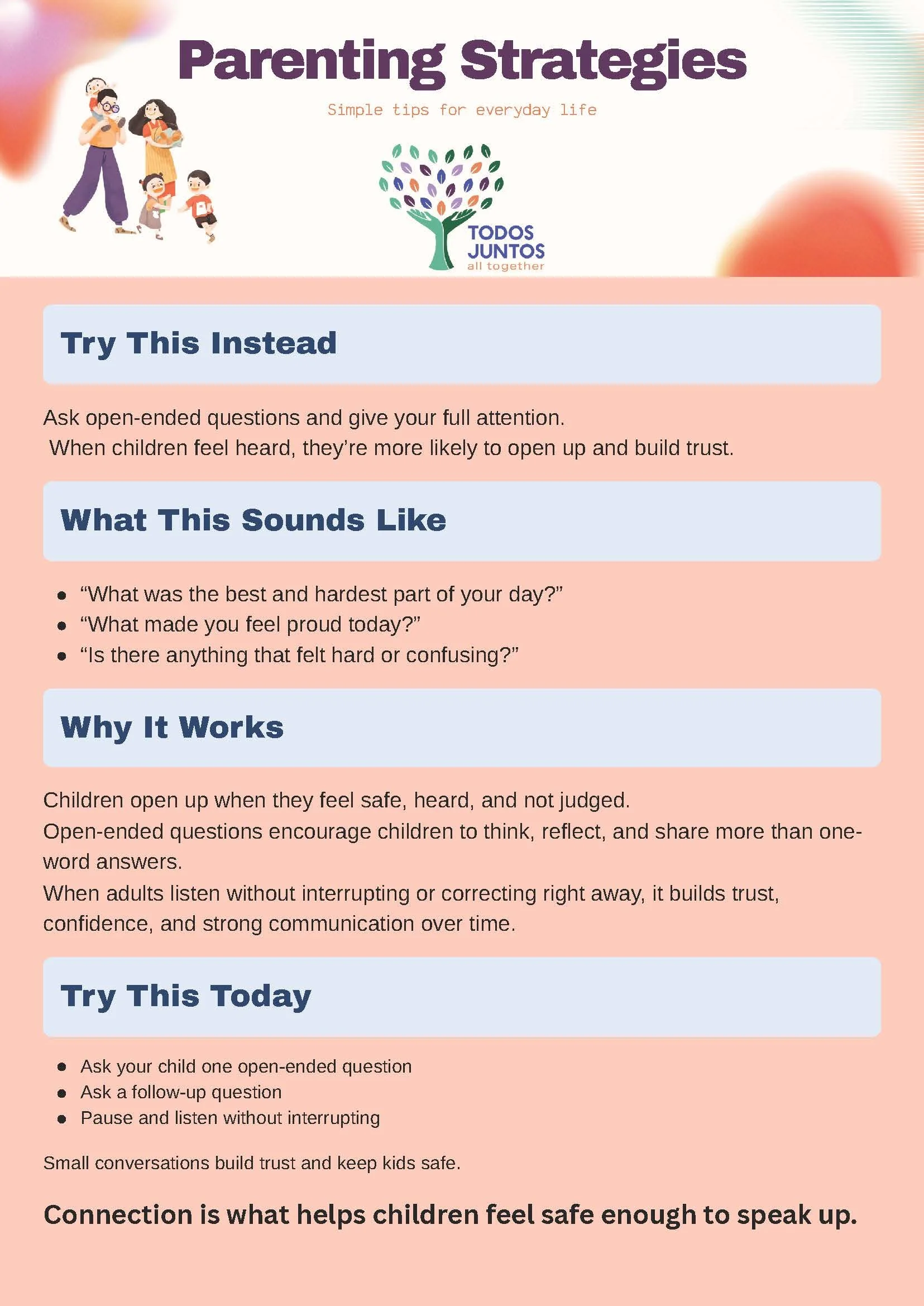
Try This Instead
Start with one simple, powerful question:
“What was the best and hardest part of your day?”
This works because:
It gives permission to share both good and hard things
It helps kids reflect (a critical thinking skill)
It shows you care about their full experience—not just the positive
Add One More Layer: Build Confidence Through Reflection
Once your child starts talking, you can deepen the conversation with:
“What made you feel proud today?”
This question:
Builds self-awareness
Reinforces confidence
Helps kids recognize their own growth
Over time, this creates something powerful:
A child who knows how to identify their feelings, experiences, and wins.
The Part Most People Miss: Listening Matters More Than Asking
You can ask the perfect question—and still shut the conversation down if your response feels rushed, distracted, or corrective.
Here’s the key:
Your job is not to fix the story.
Your job is to hear it.
What “Listening Fully” Actually Looks Like
Put your phone down
Make eye contact (or sit beside them casually)
Let them finish without interrupting
Resist the urge to correct or lecture immediately
Even small responses matter:
“That sounds really frustrating.”
“I’m glad you told me that.”
“Tell me more about that part.”
These responses build trust because they say:
“What you say matters here.”
Why This Matters More Than You Think
Strong communication at home isn’t just about better conversations.
It’s a protective factor.
Children who feel safe talking to trusted adults are more likely to:
Share when something feels wrong
Ask for help when they need it
Navigate challenges with confidence
Stay safer in real-life and online situations
When kids know they can come to you—about anything—you become their first line of safety.
How This Connects to Safety (Including Online Safety)
As children grow, their world expands—especially online.
They will:
Encounter new people
Experience confusing situations
Be asked questions or told things they don’t fully understand
And in those moments, the most important thing isn’t just rules.
It’s this:
Will they come to you?
If communication is already strong, they’re more likely to:
Speak up about uncomfortable interactions
Ask questions instead of hiding things
Trust your guidance
That’s why connection comes first.
Rules protect.
But relationships keep kids safe.
Start Small: One Simple Action Today
You don’t need to overhaul everything.
Just start here:
Tonight, ask your child:
“What was the best and hardest part of your day?”
“What made you feel proud today?”
Then pause.
Listen.
Be present.
That’s it.
Final Thought
You don’t have to be perfect.
You just have to be consistent.
Small, everyday conversations build something bigger over time:
Trust.
Confidence.
Safety.
And those are the things that stay with a child for life.
Looking for More Support?
For more parenting tips, tools, and family resources, visit
www.todos-juntos.net
Or follow Todos Juntos as we share simple, real-life strategies all month long in honor of Child Abuse Awareness Month.
