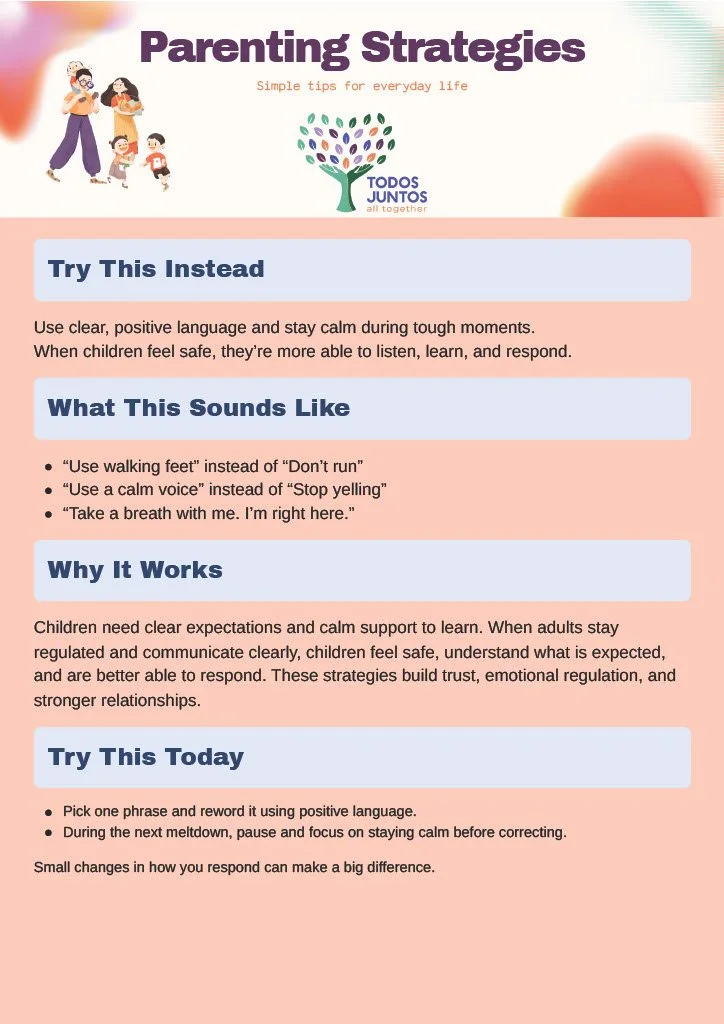
Why Children Don’t Listen and What Actually Helps!

If you feel like you’re repeating yourself all day and nothing is working, you’re not alone.
“My child won’t listen.”
“My child melts down.”
These are some of the most common challenges parents face — and they’re often connected.
But here’s the shift that changes everything:
Most of the time, children aren’t trying to misbehave.
They either don’t understand what’s expected or they’re too overwhelmed to respond.
Step 1: Say What TO Do (Not What NOT to Do)
When we say:
“Stop running”
“Don’t yell”
Kids hear what not to do — but not what to do instead.
Try this:
“Use walking feet”
“Use a calm voice”
Clear, simple language helps children understand expectations and respond more effectively.
If they don’t understand, show them.
Kids learn faster when they can see it.
Step 2: Stay Calm First During Meltdowns
When a child is melting down, their brain is overwhelmed.
They are not able to listen, reason, or make good choices in that moment.
That’s why correction doesn’t work first.
Instead:
Stay calm
Offer support
Help them regulate
Try saying:
“Take a breath with me. I’m right here.”
“I’m here. Let’s calm down first.”
Your calm helps your child feel safe — and safety is what allows them to regain control.
Step 3: Teach After They’re Calm
Once your child is calm, that’s when learning can happen.
That’s when you can:
Talk about better choices
Practice what to do next time
Reinforce expectations
Connection first. Teaching second.
Why This Works
Children need:
Clear expectations
Safe, calm environments
Support while learning new skills
When we combine clear communication with calm, supportive responses, we help children:
Understand what to do
Build emotional regulation
Develop trust and confidence
These are the skills that protect children and help them grow.
Try This Today
Pick one small moment today and try this approach:
Say what TO do instead of what not to do
Stay calm during a tough moment
Teach after your child is ready
Small shifts make a big difference.
Final Thoughts
Parenting isn’t about being perfect.
It’s about being consistent, calm, and connected,
and that’s what helps kids feel safe, learn, and grow.